 8 hours ago
4
8 hours ago
4
The island nation of Kiribati is racing against time to qualify for the 2030 World Cup amidst the existential threat of being wiped out by climate change.
The Kiribati Island Football Federation (KIFF) recently called on the international community to support its domestic football development. Their ultimate goal is to play the 2030 World Cup, which will be co-hosted by Portugal, Spain and Morocco.
For Kiribati, this is not just a sporting dream. It is a race against time.
The island nation faces the imminent risk of being entirely submerged by rising sea levels, one of the most severe consequences of global climate change. The 2030 World Cup is considered the national team's last chance to participate in the biggest football event on the planet.
 |
|
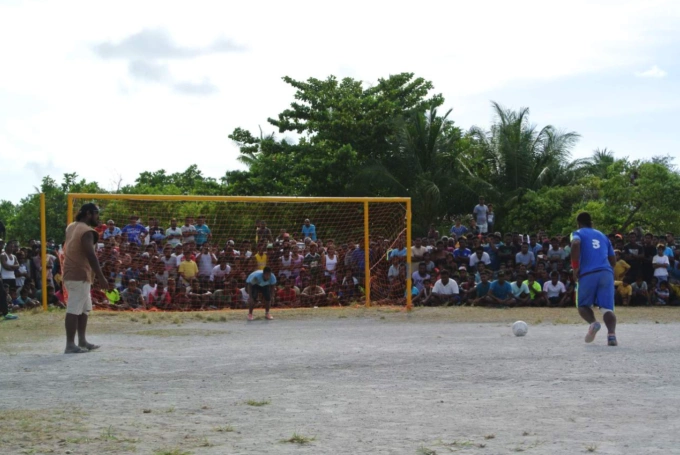
A football match in Kiribati. Photo by FIFA |
A nation at the edge of the world
Kiribati is an archipelago comprised of 33 coral islands scattered across the Pacific Ocean, only 21 of which are currently inhabited.
Famous for being one of the first places in the world to welcome the new year, the country's natural beauty is now under threat. Sea temperatures in the surrounding region are rising significantly faster than the global average, leading to coastal erosion, frequent flooding and forcing local residents to relocate, according to BBC.
To realize the goal of qualifying for the World Cup, KIFF has actively invited managers, coaches and former players from around the globe to support the development of domestic football and build a professional system capable of competing.
However, their ambitions don't stop at football. The federation intends to use the global influence of the sport to raise awareness of the current climate crisis in Pacific island nations.
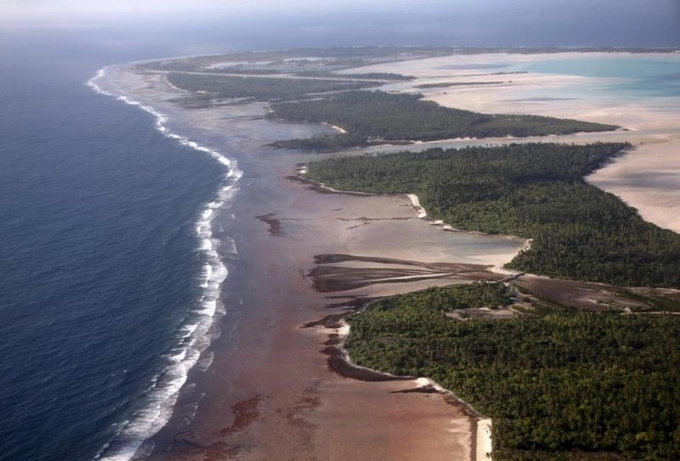
"We are facing a phantom," KIFF president Eriati Reebo told Abola. "Rising sea levels are directly affecting daily life in Kiribati. Many football stadiums are only a few meters above sea level."
 |
|
An aerial view of the coast of Kiribati. Photo by Reuters |
According to Reebo, football plays a special role in the social life of local people.
"In Kiribati, football is more than just a sport," he added. "It's how the community connects, shares a common goal and maintains national identity."
Despite being a recognized nation by the United Nations, Kiribati is not currently a member of FIFA. This exclusion means the country cannot participate in World Cup qualifiers.
Joining FIFA requires a national football federation to meet many criteria regarding organizational structure, domestic league systems, development programs and infrastructure. These requirements are difficult to fulfill for a small, geographically isolated island nation with limited resources.
The Kiribati national team have been established, with the majority of its players living in the capital city of Tarawa. Others have settled in Fiji, New Zealand and Australia, reflecting the increasing wave of climate-driven migration from the island nation.
Kiribati's football development project is now receiving support from the United Nations Environment Programme (UNEP).
 |
|
KIFF President Eriati Reebo (R) and FIFA's Chief of Global Football Development Arsene Wenger at the FIFA Congress in Vancouver, Canada, on April 30, 2026. Photo by KIFF |
Using football to warn the world
According to Reebo, the core objective of the campaign is to draw the international community's attention to the emergency situation in Kiribati.
"The idea of the project is simple: to start a global dialogue," Reebo told Abola. "We want the world to be more aware of the urgent reality that countries like Kiribati are experiencing. What would happen if an entire nation disappeared, but its people, culture and dreams remained?"
UNEP believes that football and other global sporting platforms hold immense potential for raising awareness of climate risks for vulnerable countries like Kiribati.
Although there hasn't been an official football project or direct dialogue with FIFA on this issue, the UN has repeatedly promoted campaigns that highlight the crucial role of sport in the fight against climate change.
Kiribati's priorities remain strictly focused on survival: coastal protection, ensuring water security, maintaining sustainable livelihoods and upgrading infrastructure to adapt to future climate scenarios.
However, the path to FIFA membership for this nation remains uncertain. To date, the world football governing body has yet to respond regarding the progress of the island nation's application.