 1 month ago
147
1 month ago
147
In a tragic turn of events following his first professional boxing match, Kenya’s Jacob Oyoko has died after taking a sustained series of blows from his opponent without the fight being halted by the referee.
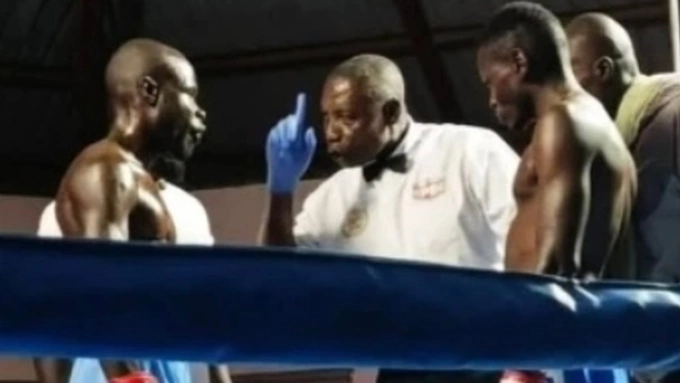 |
|
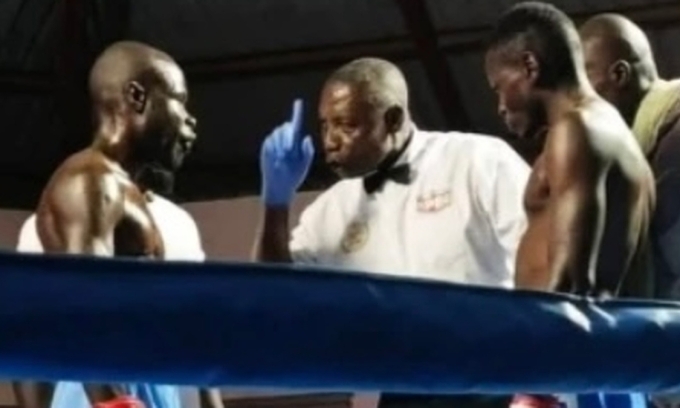
A screenshot of Jacob Oyoko (L) in a match against Julius Okuruchi at the Mumias Cultural Centre, Kakamega area, Western Province, Kenya, on March 28, 2026. |
The super lightweight bout took place at the Mumias Cultural Center in Kakamega, Kenya, on March 28. Oyoko faced off against Julius Okuruchi in a match scheduled for four rounds. The fight served as one of the preliminary matchups ahead of the main heavyweight event between Dennis Okoth and Bilali Kalande.
The turning point of the match occurred in the second round. Oyoko was repeatedly backed into a corner and suffered a heavy barrage of punches from Okuruchi.
The 38-year-old fighter appeared slow to react. He frequently lowered his hands, leaving himself exposed and failed to form an effective defense. At some points, he was left almost completely defenseless against the ropes.
The fight was not immediately stopped despite Oyoko’s condition. The referee signaled for the bout to continue. Oyoko remained on his feet but offered no significant resistance as his opponent continued to throw punches before stepping back for a second.
Only after Oyoko sustained further visible injury did the referee finally intervene. He waved off the fight, declaring Okuruchi the winner by technical knockout.
After the fight, both fighters were able to leave the ring on their own. However, Oyoko's condition rapidly deteriorated backstage.
According to Boxing Social, he complained of severe weakness and difficulty breathing before collapsing. On-duty medical personnel rushed to provide emergency first aid, administering oxygen and performing CPR. He was quickly transferred to Mumias Level Four Hospital, but despite intensive care efforts, he did not survive.
The death of Oyoko shook the Kenyan boxing community. It has raised serious questions regarding event organization, preparation and in-fight protection protocols.
An independent investigation has been requested involving medical experts, lawyers and independent boxing officials. Authorities have also demanded a comprehensive medical report from the ringside physician and ordered an autopsy to determine the exact cause of death, the Kenya Professional Boxing Commission said in a statement, according to Kenyans news site.
The details surrounding Oyoko's preparation have become the center of controversy. While he had previously competed as an amateur under the Boxing Federation of Kenya, he had taken a break from the sport before returning for this professional debut.
He had reportedly only accepted the fight two days prior. At the time, he was preparing to relocate to Mombasa for a job as a private security guard. This quick transition to the professional ranks in a short time, without extensive training camp preparation, has raised concerns regarding the licensing and eligibility checks, Australian news site Nine reported.
Event organizers maintained that the fight was fully licensed and that Oyoko passed all mandatory pre-fight checks. Organizer John Wakungui stated that all required safety measures were strictly followed, dismissing allegations that Oyoko's team failed to intervene in time.
In professional boxing, a coaching staff can throw the towel in to stop a bout if their fighter fails to continue. However, doing so often carries financial penalties, including the potential loss of the fighter's prize money. These factors can cause hesitation during dangerous situations.
The role of the referee is also under scrutiny. Many observers strongly believe the fight should have been halted much earlier, especially when a fighter who is cornered without the ability to defend while absorbing punches can be ruled as a knockdown, giving the referee grounds to intervene.
In the wake of this tragedy, there are urgent calls for reforms within Kenyan boxing. Advocates are proposing tighter regulations for boxers making their professional debuts, particularly those accepting short-notice fights without recent competitive data.
There is also a strong push to eliminate the financial penalties associated with a team throwing in the towel. Stricter pre-fight medical tests and enhanced ringside supervision are also being demanded.