 17 hours ago
12
17 hours ago
12
Lionel Messi has officially surpassed the US$1 billion net worth threshold, cementing his place among the world's wealthiest athletes and joining his long-time rival, Cristiano Ronaldo, in the exclusive billionaire club.
 |
|
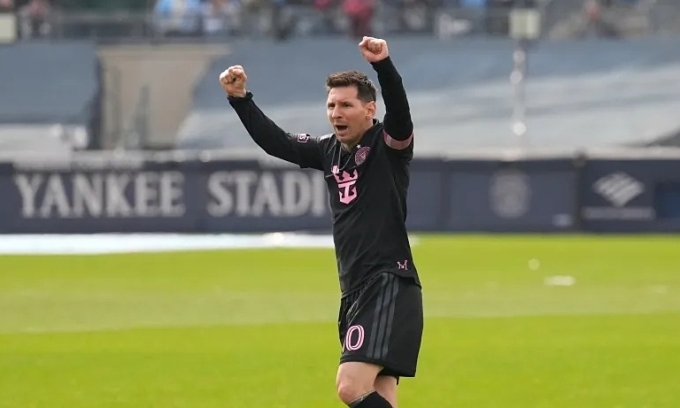
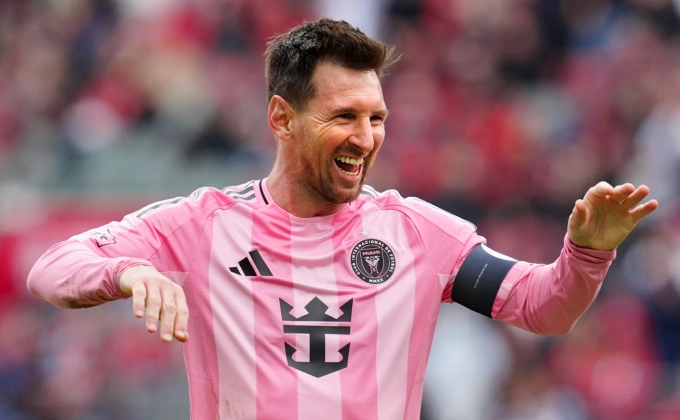
Lionel Messi celebrates a goal during Inter Miami's 2-0 victory over Toronto FC on May 9, 2026. Photo by AP |
According to Bloomberg, the 38-year-old Argentine has earned more than $700 million in salary and bonuses since his professional debut in 2007. When adjusting for taxes, market performance, and substantial income from investments and sponsorships, his net worth has soared past the $1 billion mark on the Bloomberg Billionaires Index.
This financial milestone places him alongside Ronaldo, the Portuguese superstar who became the sport's first billionaire after signing a new lucrative deal with Saudi Pro League club Al-Nassr last year.
In the early years of his career, Messi's marketing machine occasionally struggled to match the heights of his performance on pitch. However, under the guiding hand of his father, Jorge Messi, his business portfolio has flourished in recent years.
A massive paycheck from his current team, Inter Miami, purported TV revenue-sharing deals, significant real estate holdings, and a stake in an Argentine restaurant chain have all helped propel him into billionaire status.
This milestone could easily have happened sooner. Many observers were surprised when the player, fresh from leading Argentina to a World Cup victory in 2022, turned down a contract worth $400 million annually to play in the Saudi Pro League. Instead, he chose to join Inter Miami in the U.S., while Ronaldo accepted his own Saudi contract in 2023, reportedly worth over $200 million a year.
"Money was never a problem for me, nor an obstacle in anything," Messi told Mundo Deportivo in an interview that year. "If it had been about money, I would have gone to Saudi Arabia or somewhere else."
The Inter Miami deal came with unprecedented perks for Messi. This included an option that gives him the right to purchase a stake in the club, where retired England star David Beckham is already a prominent shareholder.
While it remains unclear exactly what stake Messi has taken since joining the club, Inter Miami's fortunes have skyrocketed. According to Sportico, the club's value increased by more than a fifth in the year leading up to February, reaching approximately $1.45 billion. Inter Miami are now the most valuable football club in the U.S. and ranked 16th globally, ahead of Newcastle United.
Messi's move to the U.S. also opened up other avenues for compensation. During the initial contract negotiations, Major League Soccer and Apple discussed a revenue-sharing agreement that would allow Messi to earn a cut of the sales from new subscriptions to Apple TV+'s MLS Season Pass streaming package, as reported by The Athletic.
Inter Miami's owner, Jorge Mas, noted that subscriptions to the streaming service doubled in the month immediately following the player's arrival. In an interview earlier this year, Mas indicated that Messi's total annual compensation from the club ranges between $70 million and $80 million, factoring in both player salary and equity rights.
 |
|
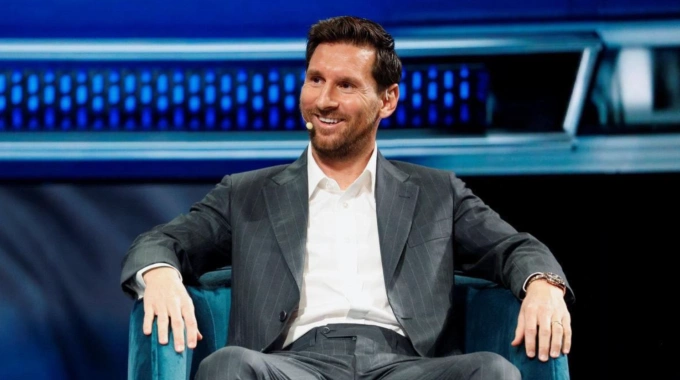
Lionel Messi speaks at the American Business Forum at the Kaseya Center on Nov. 3, 2025. Photo by Reuters |
Off the field, Messi has relied heavily on his father, Jorge, who serves as his agent, business manager, and primary adviser. Meanwhile, Alfonso Nebot Armisen, a relatively low-profile Spanish banker, has managed Messi's private investment firm since 2009.
In December 2024, Messi expanded his financial footprint by listing a Real Estate Investment Trust (REIT) on a small Spanish exchange, valued at $232 million. The company, Edificio Rostower Socimi, owns several hotels and other commercial properties.
He has also been expanding into the consumer goods sector. In 2024, he released the Más+ by Messi sports drink in partnership with Mark Anthony International SRL. Additionally, he joined the Argentine restaurant chain El Club de la Milanesa to assist with its international expansion.
Much like Ronaldo, and perhaps with an eye toward his post-playing career, Messi is actively building a portfolio of football club ownerships. He recently acquired the fifth-division Spanish club UE Cornellà. This adds to his existing stake in Deportivo LSM, a Uruguayan club he co-owns with his close friend and former teammate Luis Suárez. Furthermore, Messi's family founded and currently runs a lower-division club called Leones de Rosario in their native city in Argentina.