 5 hours ago
1
5 hours ago
1
If Paris Saint-Germain defeat Arsenal in the Champions League final on Saturday, every player, regardless of whether they are a star starter or a substitute, will receive an equal bonus of US$1.16 million.
 |
|
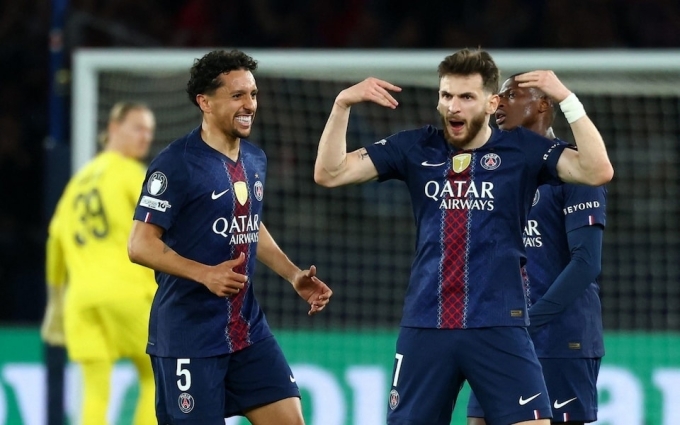
Khvicha Kvaratskhelia (R) celebrates a goal with Marquinhos during the PSG-Bayern Munich match at the Parc des Princes in Paris, France, in the first leg of the Champions League semifinals on April 28, 2026. Photo by Reuters |
French newspaper L'Équipe reported the payout details on Thursday, shortly before the PSG squad departed for the final in Budapest, Hungary.
The bonus mirrors the club's approach from last year, when PSG thrashed Inter Milan 5-0 to secure their maiden European title.
According to L'Équipe, this bonus distribution method extends beyond pure monetary value. It sends a message to promote a collective culture that is gradually becoming ingrained in the salary and bonus structure at the Parc des Princes.
Like most European giants, PSG negotiates player bonuses at the beginning of the season. The dressing room is represented in these talks by a four-man leadership group comprising Marquinhos, Achraf Hakimi, Ousmane Dembélé and Vitinha.
While the negotiation process is standard, the payout structure under head coach Luis Enrique is notably different: the club now solely financially reward collective titles.
For domestic competitions, the bonus is only disbursed if PSG wins the Ligue 1, a feat they achieved in early May to claim their 14th league title.
A similar scenario applies to the Champions League. Bonuses for simply progressing past the quarterfinal or semifinal stages are now merely symbolic compared to the club's immense financial stature.
"Real bonuses only come with titles; that's the culture of a great team," a source from PSG told L'Équipe.
This approach marks a significant shift from PSG's past eras. Previously, high-profile stars often negotiated special personal clauses into their contracts, guaranteeing them big individual payouts if they lifted the Champions League trophy.
That mechanism created a deep divide between players and formed levels within the dressing room.
 |
|
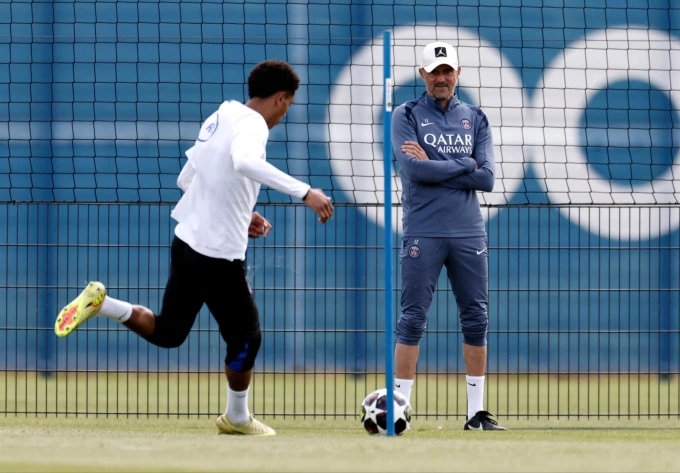
Coach Luis Enrique (R) at the training center of PSG on May 20, 2026. Photo by Reuters |
Now, PSG aims for maximum equality. While a few personal clauses still exist in certain contracts, collective bonuses remain the absolute priority.
Driven by a policy established by sporting advisor Luís Campos, PSG are working to impose a strict standard of equal tournament pay.
The policy was evident last season when Senny Mayulu, a young academy talent who had only played three Champions League matches before scoring in the final, received the exact same bonus as the most seasoned veterans in the squad.
The principle remains unchanged for the final on Saturday and has served as a major mental boost for young academy graduates. Every single player who has set foot on the pitch during this Champions League campaign will receive the full payout if the team secure the title.
This inclusive rule applies to players like Quentin Ndjantou, who made three appearances in the group stage but has been sidelined since January 2026 with a hamstring injury.
By keeping all contributors on equal financial footing, the club are sending a clear message to the squad: just by participating, every player is an important part of writing history with PSG.